
Wondering how to learn more about sleep surgery?
The first step is seeing a surgeon so you can discuss surgery directly, especially if you are not responding to first-line sleep apnea treatment options.
Obstructive sleep apnea is the blockage of breathing occurring during sleep. First-line options include conservative measures (weight loss when appropriate, avoiding sleep on one’s back, and avoiding alcohol within 3 hours of bedtime) and positive airway pressure therapy (such as CPAP). The challenge is that these may not be effective for many patients, with that estimated generally at 30% of patients. I have written previously about research showing that only 10% of office visits in the United States related to obstructive sleep apnea in adults are occurring with otolaryngologist – head and neck surgeons (also known as ear, nose, and throat doctors). This 10% figure is lower than one would expect, given that surgeons are able to diagnose, initiate treatment (whether or not Board-certified in sleep medicine), and discuss potential sleep apnea surgery options.
What otolaryngologists do for snoring and sleep apnea
A patient with snoring or obstructive sleep apnea might see an otolaryngologist—head and neck surgeon for a few reasons. Often I provide the initial evaluation and can identify factors that should be addressed even before a test for sleep apnea, called a sleep study. Performing a detailed history and physical examination of the nose and throat is essential to identify easily-treated conditions that can cause snoring or sleep apnea, potentially treating them with surgery. Otolaryngologists specialize in head and neck surgery and are best positioned to examine the areas of the body that are responsible for snoring and sleep apnea in most patients. This examination is critical for any patient that might be considering sleep surgery. Sleep surgeons are surgeons (often otolaryngologists) who specialize in snoring and sleep apnea, typically offering even more experience and focus in this area.
If a patient has snoring without sleep apnea, an otolaryngologist-head and neck surgeon is best positioned to offer surgical and non-surgical treatments of the head and neck. Often, it can be as simple as steps to take at home, as described in a previous blog post. However, there are a number of conservative procedures, including soft palate radiofrequency.
Finally, I see patients with sleep apnea who are referred after either being unable to tolerate positive airway pressure therapy or after previous surgery that does not alleviate their sleep apnea. In these patients, we are often looking to treat sleep apnea without needing other treatments. It is commonly argued that surgery does not work for sleep apea. That is simply not true. Although the most common surgery, soft palate surgery, does not resolve sleep apnea in many patients, it has been shown to provide substantial benefit, often similar to positive airway pressure therapy, in the highest-quality study that followed large groups of Spanish patients with sleep apnea over time.
Surgery for sleep apnea is not limited to this one procedure alone. In fact, this website describes the many different kinds of surgery that I do perform and some procedures that I no longer perform. My research has focused on identifying the factors contributing to snoring and sleep apnea, and it is well-established that using the same treatments for all patients is doomed to failure. There are a number of providers—sleep medicine physicians, otolaryngologist—head and neck surgeons, and dentists—that advertise heavily aand offer a single option to patients, but everything we know about snoring and sleep apnea indicates that this is doomed to failure because people are different.
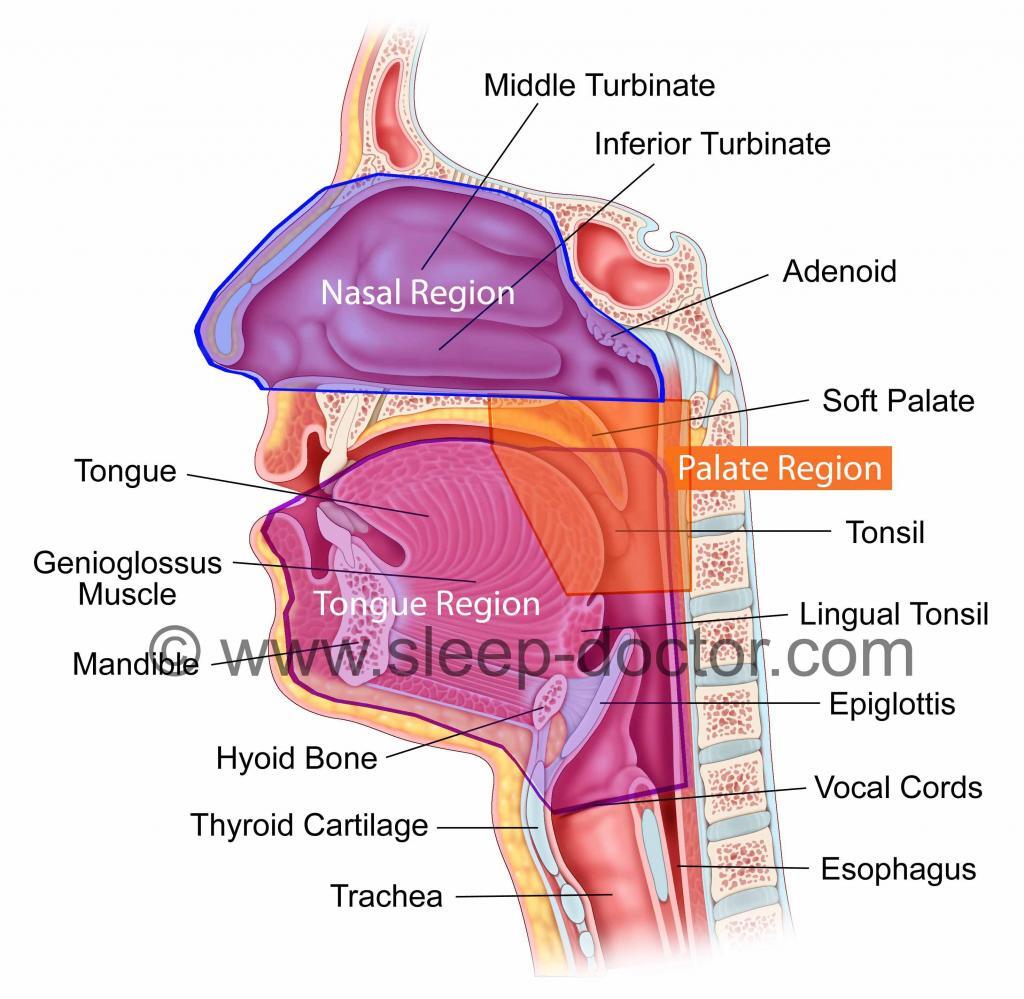
Surgery for sleep apnea enlarges and stabilizes different structures around the airway to treat snoring and obstructive sleep apnea. There are three major areas that can contribute to these conditions: the nasal, palate, and tongue regions (see anatomy diagram below). In an individual adult with obstructive sleep apnea, often more than one of these areas are responsible. Addressing these areas in a targeted yet appropriate fashion through surgery improves outcomes. Careful patient evaluation represents a critical opportunity to develop a personalized treatment plan and achieve the best results. Based on high-quality research, we have shown that a surgical evaluation technique called drug-induced sleep endoscopy can be important in guiding decisions. We often perform this evaluation as a first step in planning for surgery.
Why does it matter if patients see otolaryngologists if they are candidates for sleep surgery?
Many patients who do not tolerate positive airway pressure therapy currently go untreated. This is not acceptable. Whether patients with sleep apnea are sleepy or fatigued or whether they have potential serious health risks (especially true for those with moderate to severe sleep apnea), many patients are told that positive airway pressure is their only option and never see another provider if they cannot tolerate it. For patients who do not tolerate positive airway pressure, the important thing to know is that there is more that can be done. The first step is to learn why someone cannot tolerate positive airway pressure therapy. Simply not liking a CPAP machine is not a good-enough reason to consider sleep surgery, as often there are some simple things that can be done to improve usage of positive airway pressure therapy. For example, some of my happiest patients are those who have blockage of breathing in their nose and find it uncomfortable to wear a mask that blows air through the nose until they have their nasal passages opened.
What should I do if have snoring or sleep apnea?
Sleep disorders can be treated by a variety of providers: sleep medicine physicians, sleep surgeons (typically otolaryngologist—head and neck surgeons but also oral and maxillofacial surgeons), and sleep dentists. Patients benefit from having providers who are aware of the range of treatment options, starting with conservative treatments and including surgery when this makes sense. Patient should seek out providers that work with colleagues from other specialties who are dedicated to making sure every patient gets treated properly, independent of their own area of expertise.
In sleep surgery and all medical fields, we must avoid the cliché of “When you have a hammer, everything looks like a nail” that leads individual providers, working in isolation, to promote the only treatment they offer. Because patients today are so educated (and I hope this blog and website help for those considering surgery), it is important to make decisions with patients rather than for patients. Patients often report that providers have made absolute statements like “positive airway pressure is the only treatment for sleep apnea”, “surgery does not work”, or “XXX procedure is the only one that works”. All of these statements are wrong. Snoring and sleep apnea are just like any other medical condition. Treatment requires an option that works and that patients will accept.
Have we made progress in developing a team approach?
In my career now spanning more than two decades, we have made tremendous progress in bridging divides separating sleep medicine and sleep surgery colleagues. I have been fortunate to work with outstanding sleep medicine teams – at academic medical centers and private practice in multiple cities an – who understand that surgery is an excellent option for many adults. Our trust and collaborative care approach has been based on our commitment to delivering the highest quality patient care. Colleagues appreciate my reinforcing the importance of conservative approaches before surgery, and I appreciate their understanding that many patients simply cannot sleep comfortably with positive airway pressure therapy and may not benefit sufficiently from conservative approaches.
Advances in sleep surgery have deepened the level of care across specialties. The development of hypoglossal nerve stimulation, first with Inspire’s Upper Airway Stimulation in 2014 and then with Nyxoah’s Genio system in 2025, has facilitated the collaborations between sleep medicine and sleep surgeons. Although I have a fair amount of experience with managing patients treated with nerve stimulation, for over a decade, I have involved sleep medicine colleagues in managing the patients after I perform surgery to implant these systems. Patients have received excellent care, and it is important for sleep medicine providers to understand they are not losing their patients to surgeons, just because the patient undergoes surgery. I take great efforts to make sure patients return to their referring sleep medicine provider, again whether their provider is at an academic medical center or in private practice, and that we remain in close contact even after the patient has healed from their surgery. My role is generally only stepping in when patients are NOT doing well, working to identify why this may be happening and how to improve the results of surgery. My favorite line is telling patients, after they have healed, that I hope I never see them again because that means they have done well and do not need to see me!
The key is that my surgery patients know I am still informed about their progress and am always there to help if problems arise.

 Santa Monica Office
 Beverly Hills Office



97 − = 90