
Have you ever wondered if surgery should be considered a first-line treatment for obstructive sleep apnea? If so, you are not alone. I certainly have many patients who report knowing from the outset that they would not be able to tolerate non-surgical treatments–and were right–and wished they could proceed directly to surgery. The point is that this is not just an idea proposed by someone (me) who believes in sleep surgery.
In the United States and many other countries, adults with obstructive sleep apnea start with positive airway pressure therapy (such as CPAP). Surgery is reserved for patients who are unable to tolerate or benefit from positive airway pressure therapy. We know that at least 1/3 of adults with obstructive sleep apnea cannot tolerate positive airway pressure and should consider options, including surgery. The next question is whether there are some patients who could tolerate positive airway pressure therapy but are such favorable candidates for surgery that they should consider it as first-line treatment.
For children, adenoidectomy and/or tonsillectomy is the standard treatment, but positive airway pressure therapy is not an ideal treatment for most children. This is due to concerns over effects on facial growth and difficulty that children may have with tolerating positive airway pressure through the night. It is reassuring that surgery outcomes in children–while by no means perfect–are relatively good, especially when the tonsils or adenoids are enlarged and when the child is not substantially overweight.
What about tonsillectomy for sleep apnea as first-line treatment in adults?
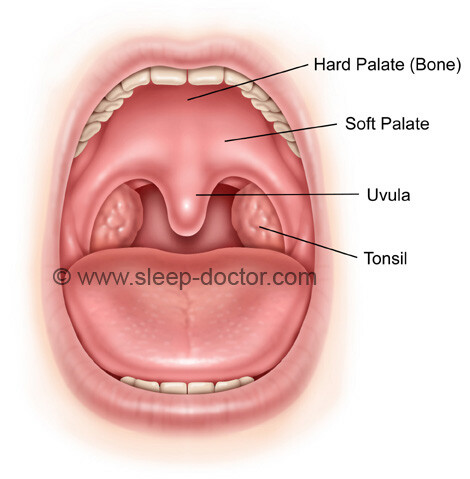
Just like in children, adults with enlarged tonsils also do better after sleep surgery that includes tonsillectomy. One reason seems to be that the physical removal of the enlarged tonsils during surgery immediately opens up space for breathing and improves the sleep apnea. Many have wondered whether adults with sleep apnea and markedly enlarged tonsils should be treated initially with surgery that includes tonsillectomy before considering other treatments.
This has been examined with multiple previous studies. The December 2016 issue of the medical journal The Laryngoscope included an interesting study examining this question. Twenty-nine adults with markedly enlarged tonsils (size 3+ or 4+ on the Friedman scale), obstructive sleep apnea, and no substantial obesity (body mass index below 32 kg/meters squared) underwent tonsillectomy alone. Comparing sleep studies before and then 6 months after surgery, the average apnea-hypopnea index decreased from 40 to 7 events per hour after undergoing tonsillectomy for sleep apnea, with only 2 patients having anything worse than mild sleep apnea! There were also substantial improvement in the score on the Epworth Sleepiness Scale score that measures daytime sleepiness (mean score decreased from 11 to 6).
Are there other studies of tonsillectomy for sleep apnea?
This study followed previous smaller studies showing substantial improvement or resolution in sleep apnea after surgery consisting of tonsillectomy alone, tonsil size and body mass index were associated with outcomes after tonsillectomy alone, and tonsillectomy could reduce the required CPAP pressure in those who did not have resolution of their sleep apnea. This was supported by a larger study of 202 adults published in 2015. This study showed a 95% chance of success after tonsillectomy, with a decrease in the average apnea-hypopnea index from 18 to 3 events per hour.
So why isn’t tonsillectomy for sleep apnea a first-line treatment in adults?
There are likely many reasons. First, not all patients with obstructive sleep apnea have tonsils that are markedly enlarged. I would estimate that about 5-10% of all adults with sleep apnea would be ideal candidates for surgery (including tonsillectomy) as a first-line treatment. This figure seems relatively small, but it still is quite a few patients who could benefit from surgery (including having their tonsils removed) because sleep apnea is so common. Second, most of these studies are relatively small. It would be important to repeat the studies in larger groups undergoing surgery, just to confirm the findings.
Third, these studies are not what are called randomized trials. Randomized trials could include patients with sleep apnea and markedly enlarged tonsils, either performing surgery including tonsillectomy or observing them without surgery or other treatment for a period of time (6 months, for example). Unfortunately, it turns out that making people wait for any surgery just to be part of a research study is incredibly difficult, so this may not be possible. Patients will prefer not to be involved in these studies if they are interested in having surgery (or any treatment). Finally, there are perceptions about surgery that we have to overcome. I have written before that most surgeons, other physicians, and the public think that there is only one surgery for sleep apnea. That is just not the case.
What would I recommend for those considering sleep apnea surgery?
We are in the midst of rethinking the role of sleep surgery–for all parties involved. The goal is developing a tailored approach (incorporating surgery) under the banner of personalized medicine. I see many young adults with markedly enlarged tonsils who are struggling with positive airway pressure therapy and considering surgery, including many who are not overweight. For these patients, I think it is very reasonable to think about surgery as a first-line option instead of being on positive airway pressure for the rest of their life. These patients have a greater than 90% chance of clearing up their sleep apnea with surgery including tonsillectomy. Some of them will not want to have surgery, but surgery including tonsillectomy should be part of the discussion because the results should be so good, based on everything we know about outcomes in these patients.
As a sleep surgeon, I see many patients who want surgery because they simply do not like positive airway pressure therapy, even though they are doing well with it. In fact, I actually discourage many of these patients from having surgery. Sleep surgery has important risks to consider, but when the benefit is substantial, they may outweigh these risks by far. My recommendation to patients coming for a surgery evaluation is almost always the same: if you are doing well with positive airway pressure therapy, keep using it. The one caveat are those patients who have a very high chance of resolution of their sleep apnea with a straightforward surgery including tonsillectomy. These are patients in whom surgery may, in fact, be a sensible first-line treatment for obstructive sleep apnea.

 Santa Monica Office
 Beverly Hills Office



23 + = 32