
Surgery for sleep apnea: one size fits all?
One of my first blog posts in 2012 was entitled “The Surgery” for Sleep Apnea, and it referred to the fact that, at that time, most surgeons were performing a single type of surgery in all patients. Fast forward to 2026, and that single surgery for all patients seems to have evolved to include hypoglossal nerve stimulation, whether Inspire Upper Airway Stimulation (introduced in 2014) or a second technology approved in 2025: Nyxoah Genio. That is not my approach. One procedure (or two) for all patients has never been my approach to sleep surgery. I consider myself so fortunate to train with some of the pioneers of sleep surgery, who convinced me of the importance of tailoring treatment to each patient, what is now called personalized medicine. There is a role for many types of sleep apnea surgery – including but not limited to palate surgery and hypoglossal nerve stimulation – and I find that patients can benefit from a personalized treatment plan.
We and others have published numerous research studies showing the value of careful patient evaluation to improve decision making and counseling in sleep surgery. I have written about our research, including a large study showing that drug-induced sleep endoscopy findings are associated with outcomes of surgery and Inspire Upper Airway Stimulation. This scientific foundation is the basis for how I care for patients.
Below, I have revised and updated that blog post to 2026, explaining why I feel that there be no “the” surgery for sleep apnea.
I often hear people refer to someone they know—or themselves—as having “the” surgery for sleep apnea, following it up with the assessment about whether “it worked” or not. Whenever this occurs, I take a deep breath before starting in on the explanation below.
My website hopefully makes it clear that there are many procedures available to treat snoring and obstructive sleep apnea. In spite of the multiple available options, one of our studies looking at sleep surgery from 2000-2006 showed that over 75% of sleep surgery in the United States was limited to the soft palate alone. This study was surprising to many in our field, but the study relied on databases specifically designed to answer these questions and was the most detailed sleep surgery analysis of its kind. The predominance of soft palate surgery is not unique to the United States. Based on my experiences giving lectures in many countries across the world, other countries seem to have an even higher proportion of sleep surgery focused on the soft palate alone.
We updated this earlier work by examining sleep surgery performed throughout the US in 2019, showing that isolated soft palate surgery still represented about 2/3 of all sleep surgery. Hypoglossal nerve stimulation represented about half of the remaining procedures, with the rest either being maxillomandibular advancement or Tongue Region procedures.
This study confirmed my suspicion that people pointing to “the” surgery for sleep apnea were likely referring to soft palate surgery, most likely just the surgery first described in 1982 for obstructive sleep apnea: uvulopalatopharyngoplasty (with a name like that, you can see why people just refer to it as “the surgery”). More importantly, this study showed that surgeons also think of this as the only surgery option, and it is no surprise that physicians in other fields have followed suit. These misconceptions are unfortunate, as the field of sleep surgery has come a long way since 1982.
What is the problem with uvulopalatopharyngoplasty?
Traditional uvulopalatopharyngoplasty, or UPPP, is the most common soft palate procedure. It involves tonsillectomy (if not done previously) and removal of the uvula (tissue hanging down in the back of the throat) and part of the soft palate (the back of the roof of the mouth). This is followed by sewing together the cut tissue edges in the mouth and throat. The good news is that, in high-quality research studies, UPPP has been shown to lower mortality and improve cardiovascular health in patients with severe sleep apnea. Also, most otolaryngologist—head and neck surgeons have been trained to perform it. So UPPP can help patients with obstructive sleep apnea in important ways. This is critical to point out because almost all patients undergoing surgery for sleep apnea do not tolerate first-line, non-surgical treatment, so the benefits of surgery must be evaluated against the alternatives, which often means no treatment at all.
However, we have also learned that UPPP, especially when performed by itself, does not eliminate all sleep apnea in most patients. A major explanation is that the blockage in breathing that occurs in obstructive sleep apnea can occur in the Palate or Tongue Regions (see diagram below). A landmark review of sleep surgery from 1996 (notice that 30 years have passed) showed that patients did much better after UPPP if they seemed to have blockage limited to the Palate Region, without blockage in the Tongue Region. Because blockage in the Tongue Region is common, the past 15-20 years has seen the development of alternative soft palate procedures as well as a number of procedures to treat blockage in the Tongue Region.
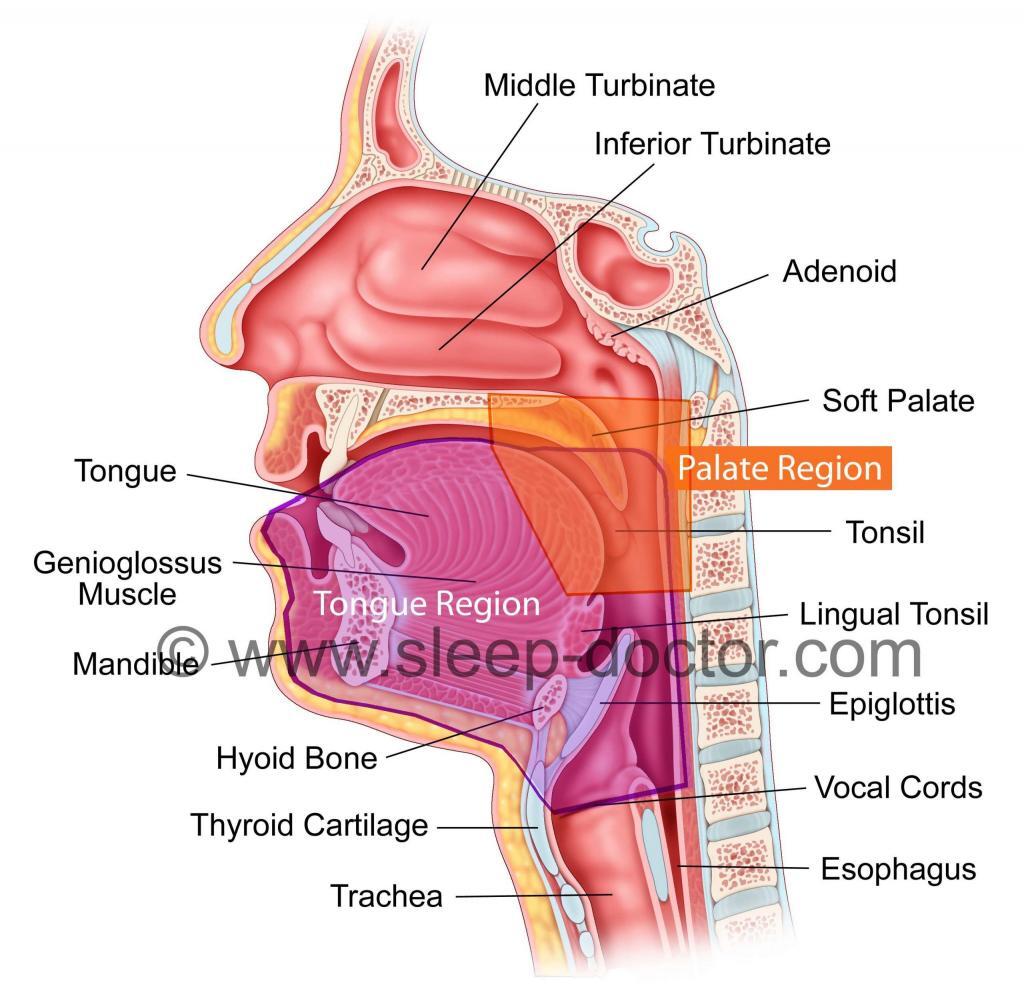
Clearly there is room for improvement in surgery for sleep apnea, but we also have come a long way from 1982 or 1996. At scientific conferences and courses, I enjoy sharing experiences and research with colleagues in our sleep surgery community. Although we have many healthy differences of opinion and experiences, at the end of the day we can agree on at least one thing:

 Santa Monica Office
 Beverly Hills Office



+ 53 = 58